


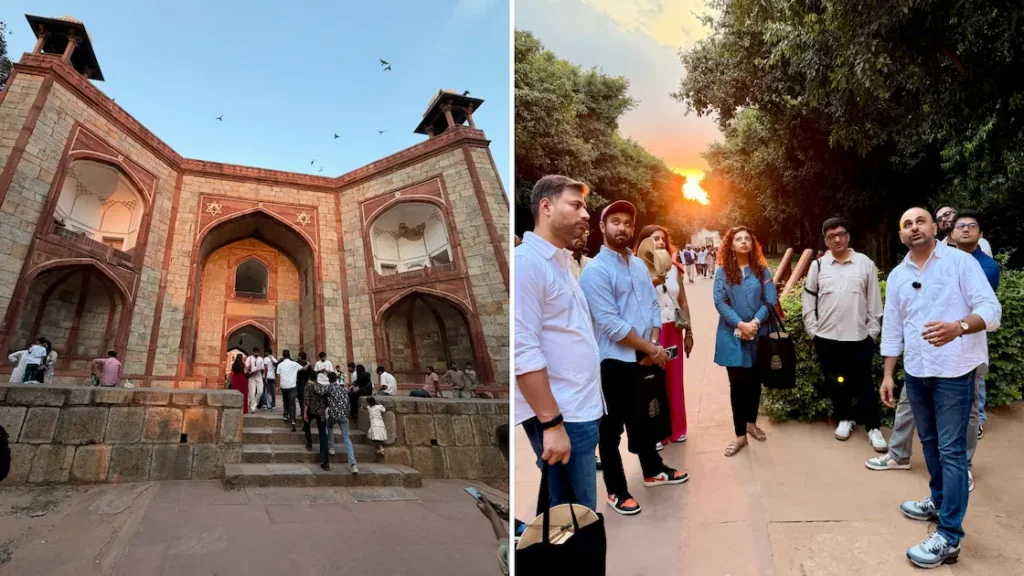
What happens when a whisky tasting begins not with a glass, but with a monument? In a rather imaginative departure from the usual masterclass format, Virasat Whisky brought together India’s architectural heritage, the history of trade and the craft of Indian single malt whisky. The setting was as distinctive as the concept- a guided heritage walk around Humayun’s Tomb, followed by a tasting nearby at The Leela Palace, New Delhi.
Guided by Gagan Sharma, founder of Indulge India, the experience offered a reminder that a spirit can be more than what is in the glass. It can also tell a story of the land, its people, the movement of commodities and the passage of time.
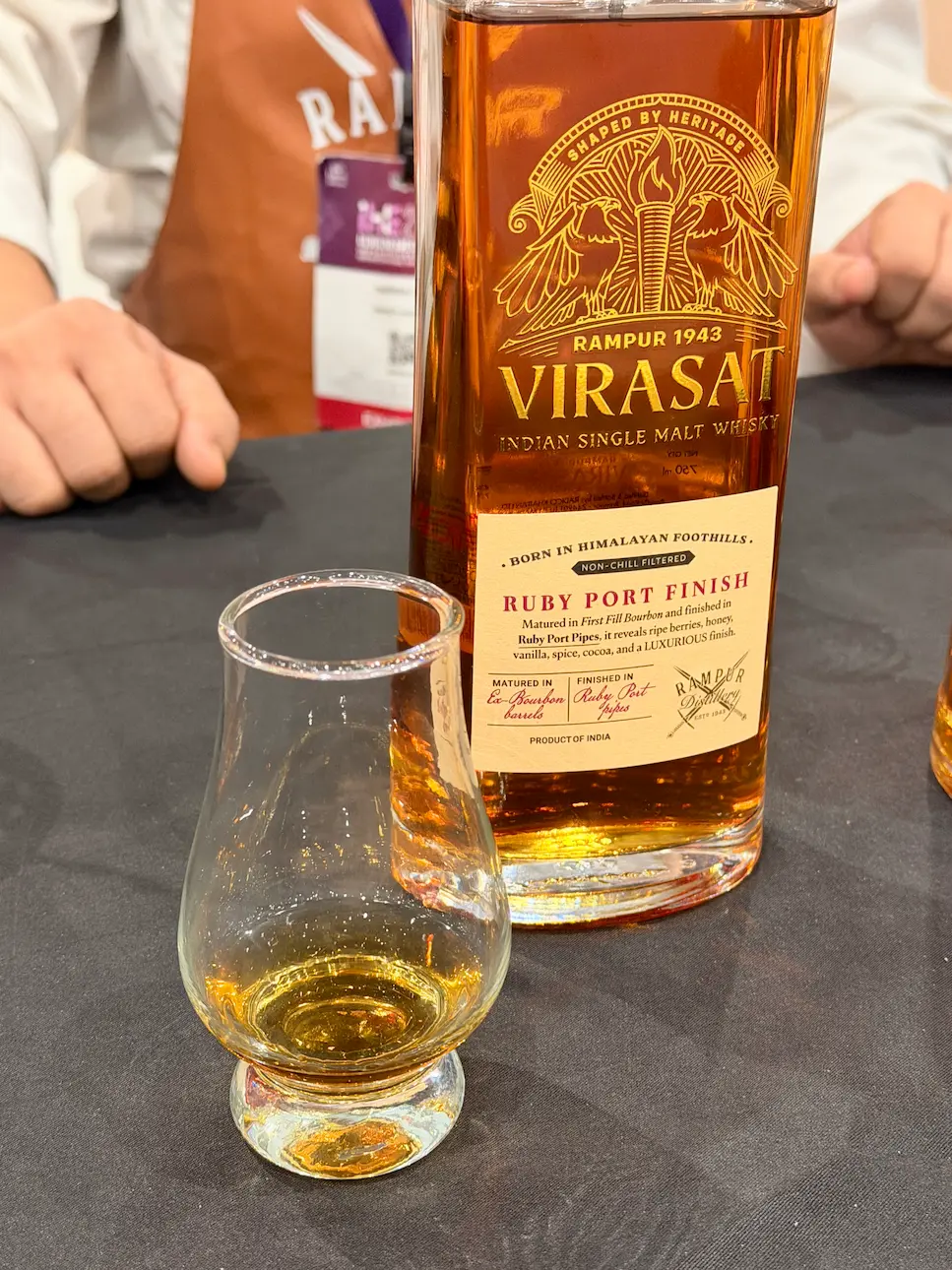
Virasat: A distinctive expression from Rampur
Virasat comes from Rampur Distillery, part of Radico Khaitan Limited, whose distilling operations date back to 1943. The name itself means heritage or legacy, and the expression is positioned as a contemporary interpretation of that history.
Its production begins with selected Indian six-row malted barley, distilled in newly designed pot stills. The spirit is first matured in American bourbon barrels and then finished in Ruby Port pipes. This finishing stage is central to the whisky’s character, bringing a fruit-led dimension to the underlying malt and oak.
Rampur’s location in northern India also matters. The substantial seasonal temperature variations- from intense summer heat to cold winters- affect maturation and the interaction between spirit and wood. The result is a whisky shaped by an Indian climate, rather than one that merely borrows a production story from elsewhere.
Virasat being their latest launch, Rampur Distillery also has a diverse portfolio of Indian single malts, each showcasing a different approach to maturation and cask finishing.Their flagship label, Rampur Single Malt, that comes in various expressions and cask finishes, has been around for much longer. Price-wise, Virasat whisky is placed in a lower bracket than the Rampur whisky range, retailing at ₹3,500- ₹4500 for a 750 ml bottle depending upon the location. Hence, it is a more affordable option from the Rampur stable.
Also Read: Paul John Scores a Hat Trick at Icons of Whisky Awards
Connecting Mughal Delhi with the malt in the glass
Our guided walk around Humayun’s Tomb, one of Delhi’s most celebrated architectural landmarks, offered a fitting starting point for exploring India’s layered cultural history and drawing intriguing parallels with the country’s contemporary single malt whisky industry. Gagan brought an engaging blend of historical insight and beverage expertise to the experience, informed by his longstanding passion for exploring heritage sites across India. His narrative connected the city’s architectural and trading past with the story of Indian malt whisky, making the outing far more than a conventional heritage tour.
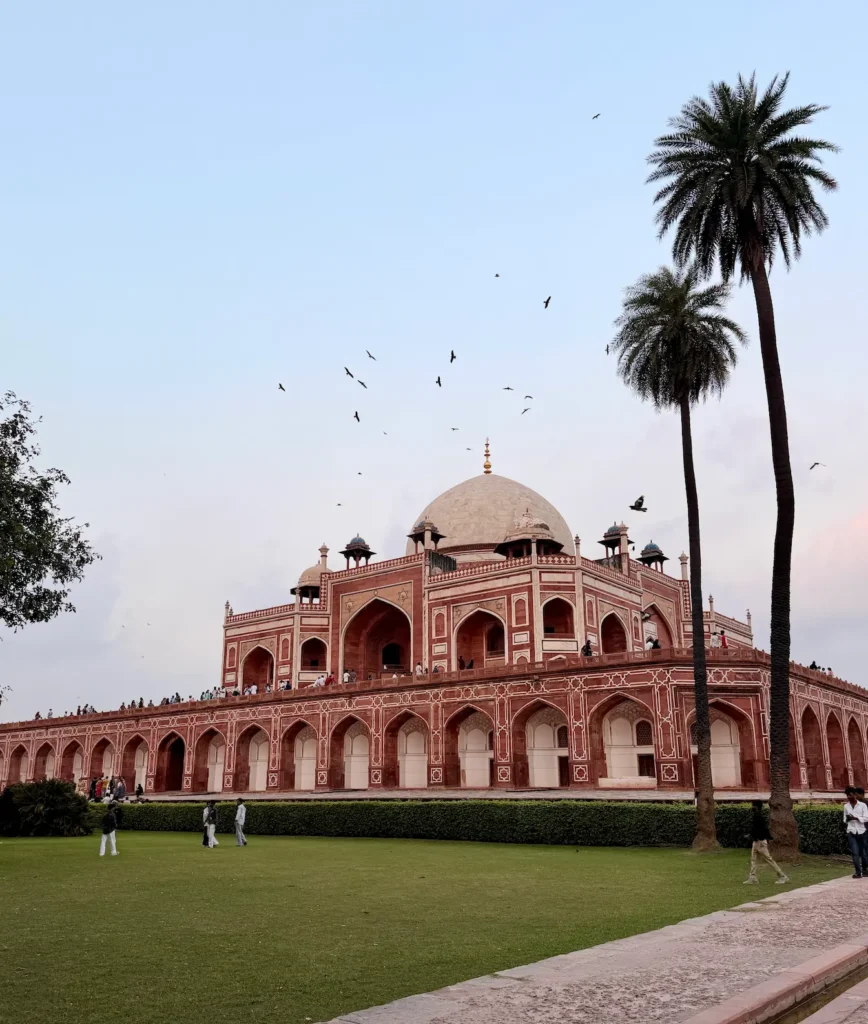
There were interesting stories shared during the heritage walk- like the role of sarais or roadside inns, that sheltered travellers, merchants and their caravans along historic trade routes. Sarai Kale Khan, a well known locale of today’s Delhi, provided a useful reference point for understanding how these networks facilitated the movement of people and goods, including agricultural produce such as grain which is an important raw material for whisky. Another interesting discussion concerned the word tamarind, which has its origin in the Persian traders identifying it as tamr hind, meaning “Indian date”. It was a small but memorable illustration of how trade leaves its imprint not just on economies, but also on language and culture.
Snapshot | Virasat Whisky
- Heritage: From Rampur Distillery, part of Radico Khaitan Limited, with distilling operations dating back to 1943.
- Indian Craftsmanship: Made from selected Indian six-row malted barley and distilled in specially designed pot stills.
- Cask Maturation: Initially matured in American bourbon barrels and finished in Ruby Port pipes, adding a distinctive fruit-forward character.
- Indian Terroir: Matured in Rampur’s northern Indian climate, where temperatures range from intense summer heat to cold winters, influencing the interaction between spirit and wood.
A tasting that let the whisky speak
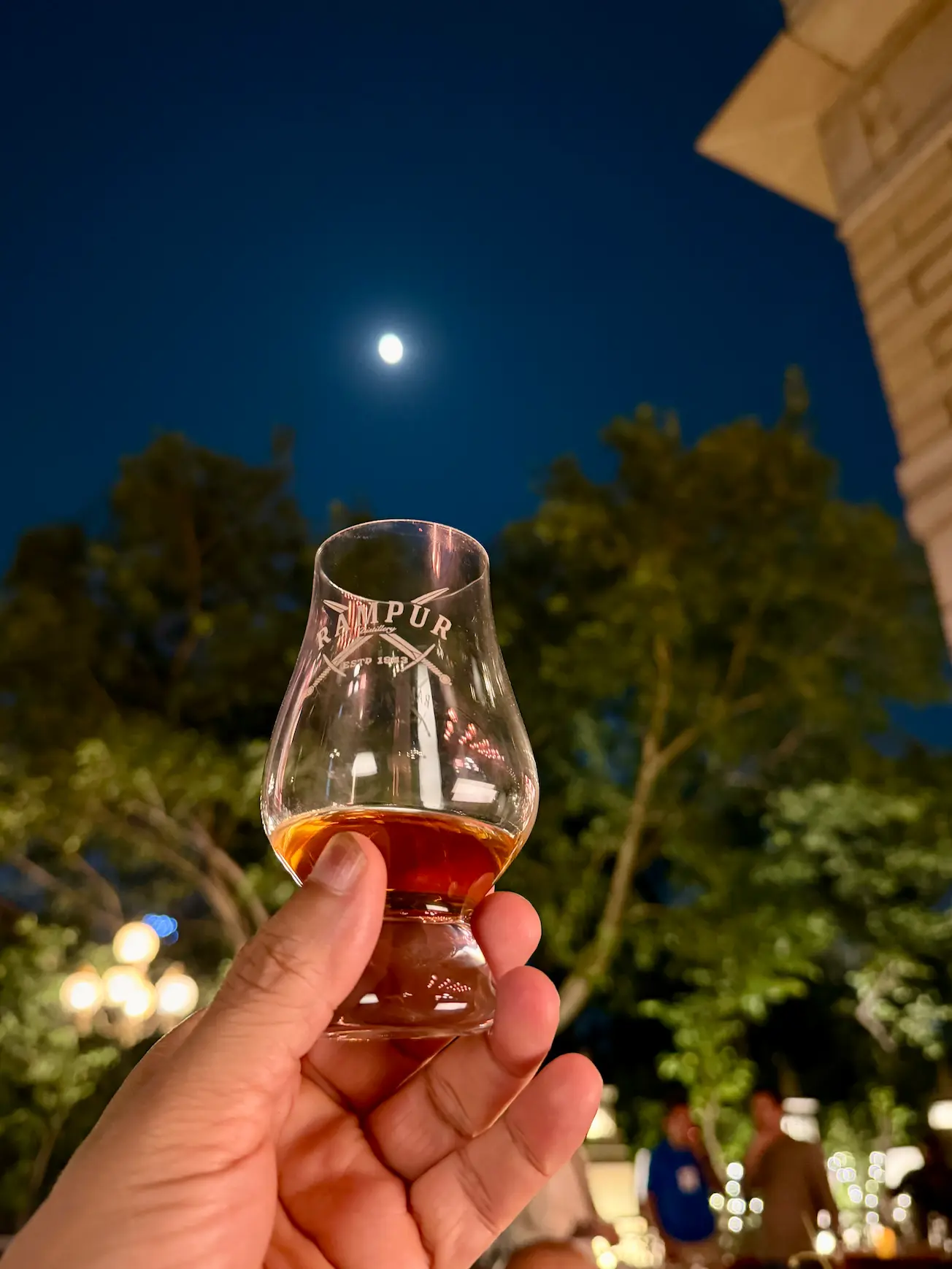
The heritage walk transitioned into a tasting at The Leela Palace New Delhi where we were transported on a special coach from the Rampur distillery. The tasting explored Virasat through three different serves in Glencairn glasses, allowing the character of the same whisky to be experienced in changing conditions.
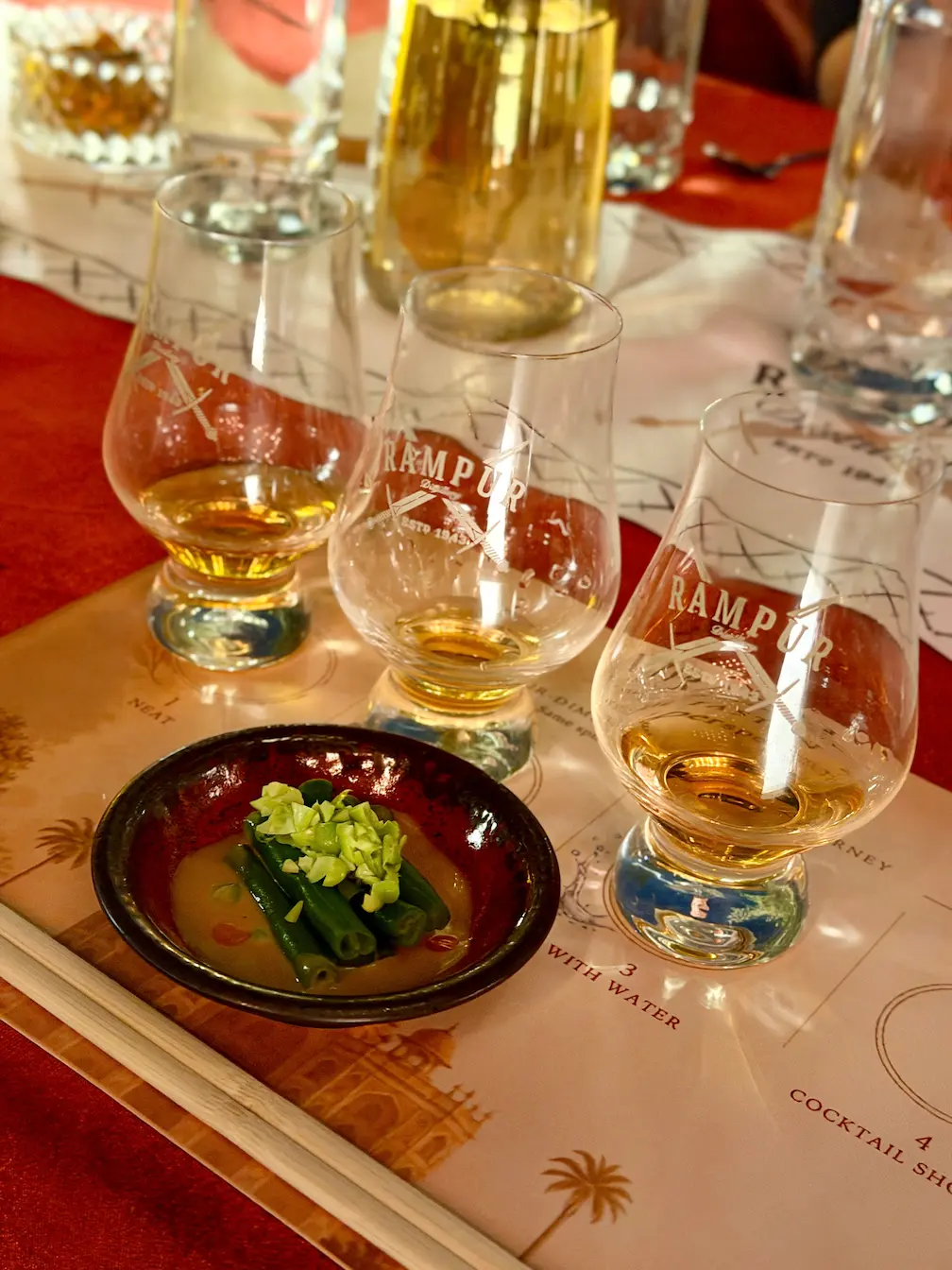
First, we sampled the whisky neat, where it’s malty, fruity and toasted-oak aromas were evident right away, followed by an oily and round palate. The mouth filling texture of the whisky ended in a smooth long finish.
For the second serve, we introduced a few drops of water that opened up the whisky further with more distinctive notes of apple, peach and orange blossom. The palate further softened with the dilution, coupled with a good level of complexity.
Lastly, we sampled Virasat on the rocks, served over one large block of ice. This time, the whisky opened up progressively, as the ice started melting slowly.
My personal preference lay with the second pour (diluted with a few drops of water) as the whisky was at its most expressive for easy identification of aromas and flavours.
Approaching the tasting in these three ways was a useful demonstration of how serving choices can influence perception.while tasting whisky. The experience was made all the more memorable by the moonlit ambience of the alfresco bar at Megu, the hotel’s Japanese restaurant.
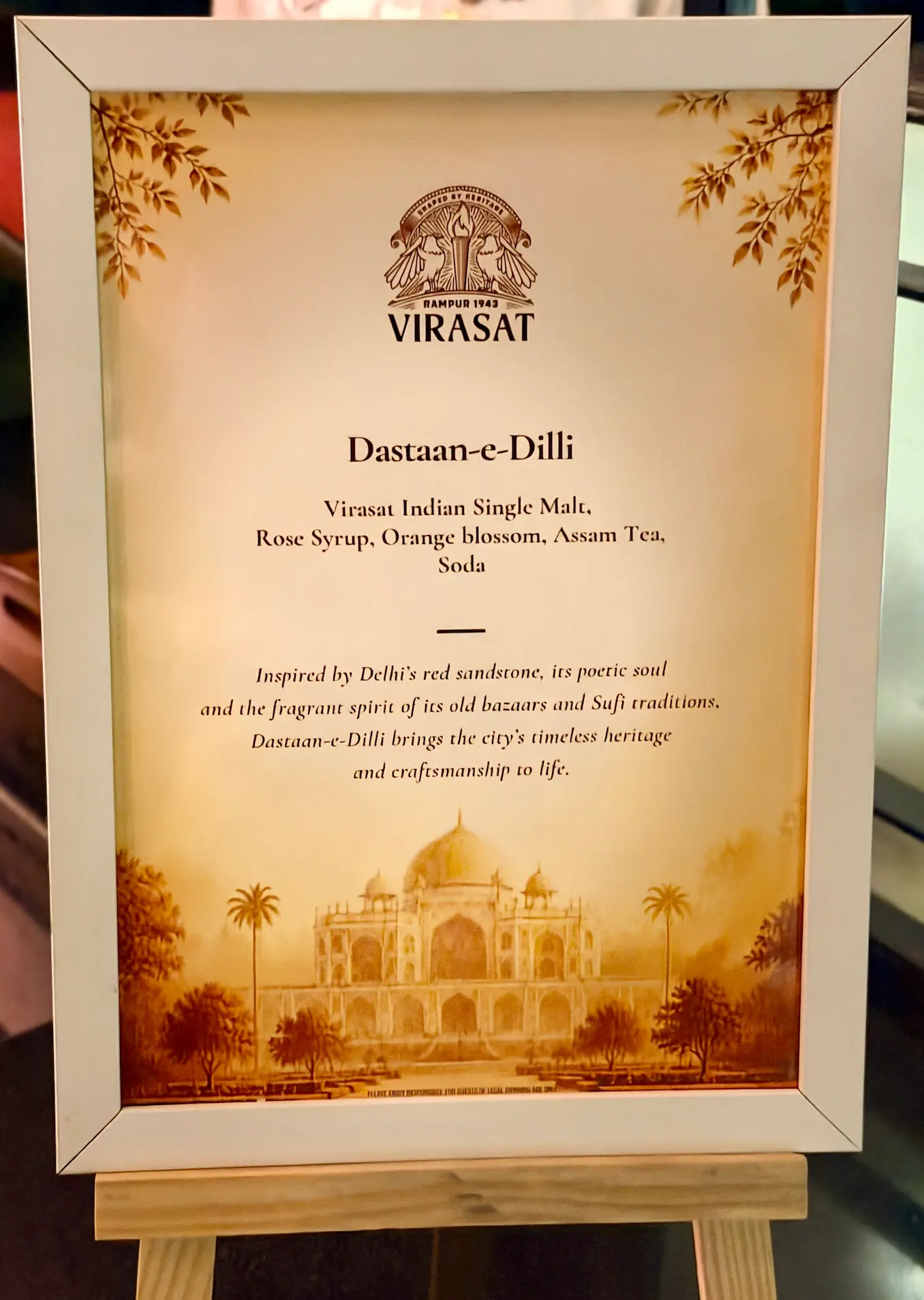
A special cocktail called Dastaan-e-Dilli (Delhi’s story) was also devised for the occasion, which we enjoyed after the guided tasting alongside some classics like Old Fashioned and Whisky Sour.
Amplifying India’s malt moment
The Virasat experience succeeded in connecting two ideas that deserve to be discussed together: India’s rich heritage and the growing sophistication of its contemporary spirits industry. The heritage walk gave the tasting a sense of place, while the whisky itself provided the tangible expression of grain, distillation, maturation and craft.
As Indian single malts increasingly earn global recognition, whiskies like Virasat stand as a compelling testament to India’s ability to craft world-class whiskies rooted in its own heritage, character, and craftsmanship.